


Global Social Media Bans for Minors: New Zealand, UK, and Australia Lead the Digital Age Restrictions

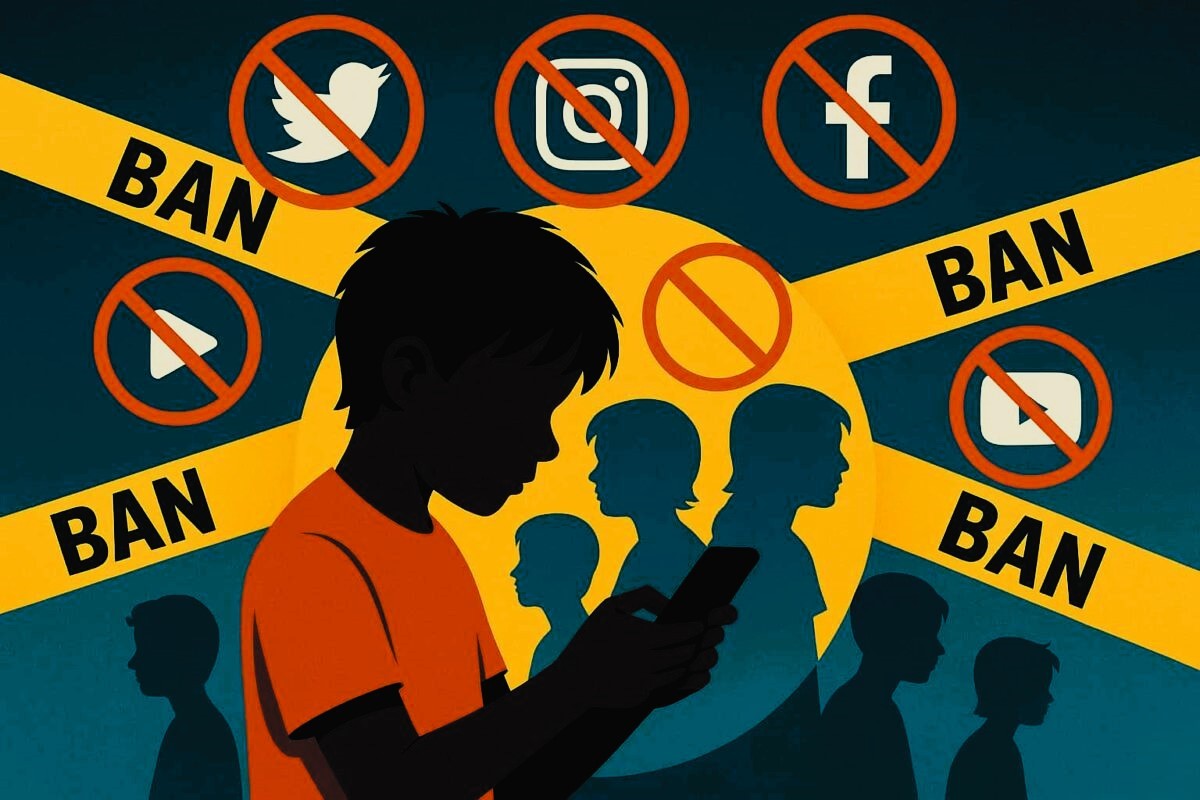
As concerns mount over the impact of excessive screen time on adolescent mental health, sleep, and education, countries worldwide are increasingly cracking down on children's access to social media. New Zealand has joined this growing international movement by introducing a landmark bill in parliament aimed at keeping children under 16 off major platforms.
Prime Minister Christopher Luxon announced the Online Safety (Minimum Age and Child Safety Risk Assessment) Bill, which seeks to hold tech giants directly accountable. Under the proposed legislation, platforms like Instagram, TikTok, Snapchat, and Facebook will be legally required to take “reasonable steps” such as utilizing facial age estimation or digital IDs to prevent users under 16 from creating or maintaining accounts. Non-compliant companies face severe penalties, including fines of up to 10% of their global revenue.
Government data highlights the urgency behind the move, showing that roughly one in three children aged 13 to 17 spends at least five hours a day on social media. Crucially, the proposed law shifts the legal burden away from children and parents, placing the responsibility squarely on tech corporations to continuously assess and mitigate online risks.
A Global Regulatory Shift
New Zealand's legislative push mirrors a broader, rapid acceleration of global efforts to reclaim childhood from Big Tech.
Australia: Became a pioneer by implementing a strict under-16 social media ban in December 2025, requiring platforms to strip millions of underage accounts.
United Kingdom: Unveiled plans for a nationwide under-16 social media ban targeted for full enforcement by spring 2027, alongside default safety curbs and curfews for 16- and 17-year-olds.
Brazil: Enacted a framework in March requiring under-16 accounts to be linked to parental profiles while banning addictive features like infinite scrolling for minors.
Other Nations: Countries including Indonesia, Malaysia, Turkey, and the United Arab Emirates have already introduced or scheduled similar bans, while European nations like France, Greece, and Denmark continue to advance strict age-verification and protection laws.
Despite widespread government action, the global push faces ongoing debates regarding technical enforcement, age verification methods, and the delicate balance between protecting minors and preserving digital privacy and freedom of expression. As parliaments debate these measures, New Zealand’s bill represents the latest chapter in a defining international effort to reshape the digital landscape for the next generation.









तपाईको प्रतिक्रिया दिनुहोस