


Tihar Festivities: Gai, Govardhan, and Mha Puja Celebrated Today

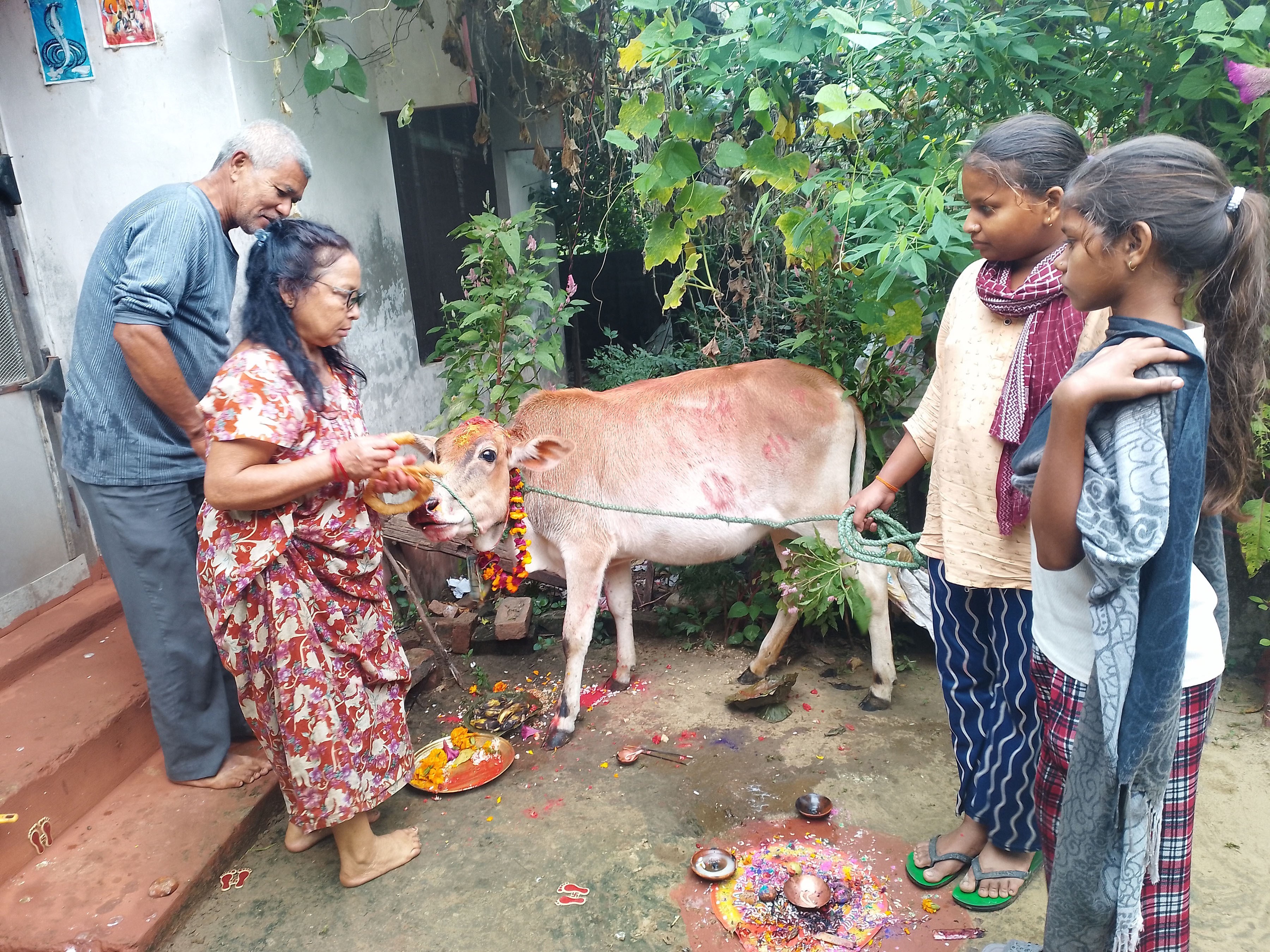
Kathmandu, Nov 2: The Tihar festival in Nepal reaches its fourth day today, with widespread celebrations of Gai Puja, Govardhan Puja, and Mha Puja across the country. This vibrant festival, which spans five days, is celebrated by the majority of Hindus and holds deep cultural and religious importance. Each day of Tihar is dedicated to different aspects of life, nature, and spirituality, symbolizing gratitude, protection, and inner harmony.
Gai Puja (Cow Worship)
Gai Puja, or cow worship, is one of the main rituals observed on this day. Hindus regard the cow as a sacred animal, associating it with the role of a mother (mata). According to traditional beliefs, indigenous breeds of cows have unique qualities, such as the ability to absorb energy from the sun and moon through their hump, which is then transmitted to humans through their milk. In Gai Puja, people express reverence for cows by adorning them with garlands, offering them a feast of sweets and special delicacies, and blessing them with love and care.
A significant part of the ritual involves tying a sacred thread, initially worn by individuals during the Janai Poornima festival, to the tail of the cow. This act holds deep spiritual meaning: it is believed that by doing so, the cow will assist in guiding a person’s soul across the mythical Baitarani River after death, helping them reach heaven. Cows are seen not only as givers of nourishment but also as spiritual guides in the Hindu belief system, offering blessings for peace in the afterlife.
Govardhan Puja
Govardhan Puja, another important ritual observed today, celebrates the Hindu god Sri Krishna’s legendary act of lifting the Govardhan Mountain to protect the people of Gokul from a devastating storm sent by Indra, the god of rain. According to legend, Lord Krishna lifted the mountain with his little finger, providing shelter to the villagers and animals from the torrential rain and reinforcing the importance of harmony with nature.
In this ritual, people create small replicas of the Govardhan Mountain using cow dung mixed with ochre, symbolizing the mountain Krishna lifted. These replicas are placed in courtyards and on the floors of homes. Applying the mixture of cow dung and ochre in this way is seen as a blessing, believed to bring protection, prosperity, and good health to the household.
Goru Puja (Ox Worship)
Goru Puja, or the worship of oxen, also takes place today. As Nepal is predominantly an agricultural country, oxen are invaluable animals, assisting in various agricultural activities, especially in plowing fields. Farmers honor oxen by offering them special foods and garlands. This ritual symbolizes respect for animals and nature’s essential role in sustaining life and livelihoods.
Nepal Sambat New Year 1145 and Mha Puja
The Newar community celebrates Nepal Sambat New Year 1145 today, marking the beginning of a new year according to their indigenous lunar calendar. The Nepal Sambat calendar was established in 880 AD by Shankhadhar Sakhwa, a visionary who is celebrated for relieving the Nepali people of debt during the reign of the Lichchhavi King Raghavdev. This act of liberating people from debt made Shankhadhar a national hero, and in 1999, he was declared a national luminary in recognition of his contributions to the country and society.
Mha Puja, meaning “worship of the self,” is observed by the Newar community on the same day. This unique ritual is based on the belief that the soul, or self, is the most important entity in the world. The ritual involves offering prayers and blessings to oneself, which is believed to purify the soul and bring peace, prosperity, and harmony. By nurturing inner peace, Mha Puja celebrates self-awareness and the importance of maintaining spiritual balance. It is believed that when the soul is content and pure, the gods are also pleased, making one's life more meaningful and prosperous.
This day holds special significance for the Newar community, especially in Kathmandu Valley, encompassing Kathmandu, Lalitpur, Bhaktapur, and other nearby areas like Banepa, Dhulikhel, Bahrabise, and Dolakha. People clean and decorate their homes with mandalas, light oil lamps, and celebrate with family gatherings and feasts, reflecting the close cultural bonds that characterize the community.
In recognition of these significant festivals, the President, Vice-President, Prime Minister, and leaders from various political parties have extended their warm wishes to all those observing Gai Puja, Govardhan Puja, Mha Puja, and Nepal Sambat New Year. They have expressed hopes for peace, prosperity, and happiness for all Nepali citizens, highlighting the rich cultural diversity and traditions that make Nepal unique.
Today’s celebrations of Tihar, Nepal Sambat, and Mha Puja reflect Nepal’s spiritual depth, cultural richness, and enduring traditions, showcasing the unity in diversity that is the heart of Nepali identity.






तपाईको प्रतिक्रिया दिनुहोस